
NSWGeneral
Australia Under Siege: Surviving the Record-Breaking January 2026 Heatwave
Australia Under Siege: Surviving the Record-Breaking January 2026 Heatwave
Urgent Alert: A massive "continental heat plume" is currently sweeping across the nation, threatening to shatter temperature records and test our resilience. From the interior of Western Australia to the bustling streets of Western Sydney, millions of Australians are bracing for a week of scorching conditions.
An intense air mass, described by climatologists as a slow-moving "heat trough," is dragging hot air from the WA interior across to South Australia, Victoria, New South Wales, and the ACT. Unlike typical summer spikes, this event is driven by a stubborn weather pattern that is preventing the usual cool changes from reaching the southern coast, trapping the heat inland and over our major cities.
With forecasted peaks ranging between 45°C and 48°C in inland regions, authorities are urging all residents to take "Extreme" heatwave warnings seriously. This isn't just uncomfortable weather—it is a significant threat to health, infrastructure, and the environment.
The Forecast: When and Where Will it Hit?
The meteorology behind this event is a classic, albeit severe, Australian summer setup. A high-pressure ridge over Western Australia has acted as a "lid," baking the interior, while a blocking high in the Tasman Sea is preventing cooler air from the Southern Ocean from flushing the heat away.
Here is the state-by-state breakdown of what to expect over the coming days:
Western Australia: The heat has already intensified over the interior, with widespread 40s recorded. This air mass is the engine room for the heat moving east.
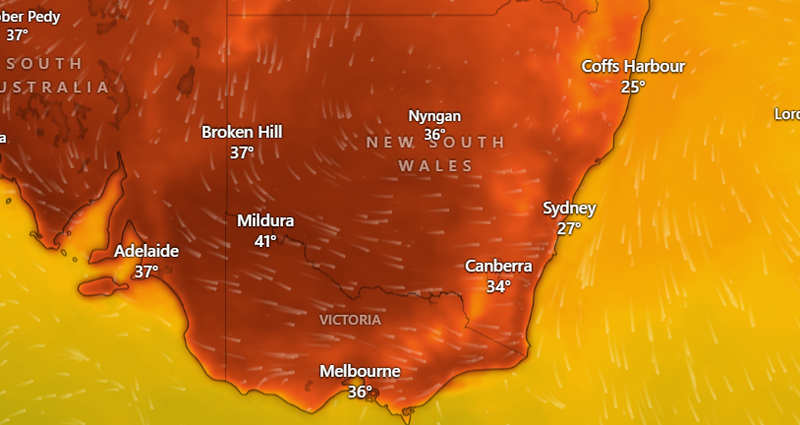
South Australia: The state is currently in the crosshairs. Adelaide is forecast to reach searing highs of 39°C to 41°C mid-week. Regional centres like Port Augusta have been flagged for temperatures exceeding 39°C by January 6.
Victoria: A prolonged run of heat is expected. Melbourne is facing a grueling three-day stretch of 30°C to 39°C temperatures. However, the north of the state will fare worse; Mildura is forecast to hit a dangerous 45°C by Thursday.
NSW & ACT: As the trough moves east late in the week, Western Sydney (particularly Penrith) and the Riverina could see the mercury climb to 48°C. Canberra is also under a severe warning, with tops of 39°C predicted.
Queensland: While the southern heat is the headline, parts of Queensland remain a high-risk priority with rising temperatures and humidity.
Critical Infrastructure Impacts: Power and Transport
Extreme heat places immense physical stress on the steel and copper that keep our cities running. Commuters and homeowners need to prepare for disruptions this week.
Public Transport Delays
If you catch the train, plan for longer travel times. Steel railway tracks expand significantly in extreme heat. To prevent the tracks from buckling under the stress of heavy locomotives, operators must enact speed restrictions.
Metro Trains (Melbourne): When the ambient temperature is forecast to reach 42°C, speed limits across the entire network are reduced to 70km/h. This safety measure inevitably causes delays and congestion.
V/Line: Regional commuters face "Extreme Heat Timetables." Speed restrictions of 90km/h are enforced on lines like Geelong, Ballarat, and Bendigo when temperatures soar. In some cases, trains may be replaced by coaches to ensure passenger safety.
Energy Grid Strain
The Australian Energy Market Operator (AEMO) has issued urgent market notices regarding "Lack of Reserve" (LOR) levels in NSW, Victoria, and South Australia. High ambient temperatures reduce the efficiency of thermal generators (coal and gas plants struggle to cool down), lowering their output capacity just as air-conditioner demand peaks.
Conversely, on milder sunny days leading up to the peak, the grid faces "Minimum System Load" risks. High rooftop solar output can push grid demand dangerously low, threatening stability. It is a volatile week for the grid; residents should monitor local power outage maps and conserve energy during peak evening windows if requested.
Health Watch: Protecting Yourself and Vulnerable Groups
Heatwaves are historically Australia's deadliest natural hazard, claiming more lives than bushfires, floods, and storms combined. The risk is not just dehydration; it is the body's inability to cool down, leading to organ failure.
Vulnerable Populations
While extreme heat affects everyone, specific groups are at statistically higher risk. Hospital data from Victoria shows that people over 65, Aboriginal and Torres Strait Islander people, and those in socio-economically disadvantaged areas see the largest spike in emergency presentations during heat alerts.
Symptom Checker
Know the difference between heat exhaustion and heatstroke—it could save a life.
Heat Exhaustion: Look for pale skin, heavy sweating, rapid pulse, muscle cramps, and dizziness. Action: Move to a cool place, loosen clothes, and sip water.
Heatstroke (Medical Emergency): Symptoms include confusion, a lack of sweating (hot, dry skin), body temperature >40°C, and seizures. Action: Call 000 immediately. Do not give fluids if the person is unconscious.
Fire Danger and Environmental Stress
The combination of high heat and dry winds has elevated fire danger ratings across the southern states. Parts of Victoria and South Australia are facing "High" to "Extreme" fire danger ratings this week.
Understanding the AFDRS
Under the Australian Fire Danger Rating System (AFDRS), an "Extreme" rating means fires will spread quickly and be extremely dangerous. If you live in a bushfire-risk area, your safest option is to take action early—do not wait and see.
Wildlife Emergency
Our native wildlife is also suffering. Flying foxes (bats) are particularly susceptible to heat stress. When temperatures exceed 42°C, they can suffer mass mortality events, often dropping from trees. Warning: If you see a bat on the ground, do not touch it. Bats can carry Australian Bat Lyssavirus. Call a vaccinated wildlife rescuer or your local wildlife group immediately.
7 Essential Steps to Stay Safe This Week
To navigate this heatwave in Australia, follow these practical steps derived from Red Cross and Health Department guidelines:
Hydrate: Drink plenty of water before you feel thirsty. Avoid alcohol and caffeine, which dehydrate you.
Block the Sun: Close curtains and blinds early in the morning to trap cool air inside your home.
Seek Cool Spots: If you don't have air conditioning, visit a library, shopping centre, or cinema during the hottest part of the day.
Check Your Mates: Call elderly relatives, neighbors, and friends who live alone. A quick phone call can ensure they are coping.
Pet Safety: Never leave kids or pets in parked cars. The temperature inside can double within minutes, leading to fatal consequences. Bring pets inside or ensure they have deep shade and abundant water.
Avoid Peak Sun: Cancel heavy exercise or sport during the middle of the day. Shift outdoor work to the early morning.
Monitor Warnings: Stay updated via the BOM weather app or your state's emergency app (e.g., VicEmergency, Hazards Near Me NSW).
Frequently Asked Questions (FAQ)
Q: Why are trains delayed when it's hot? A: Steel tracks expand as they heat up. If trains travel at normal high speeds (e.g., 110km/h+), the force can cause the expanded tracks to buckle. Operators like Metro Trains and V/Line reduce speeds to 70–90km/h to ensure safety, which extends journey times.
Q: What defines a heatwave in Australia? A: A heatwave is defined as three or more days of unusually high maximum and minimum temperatures for a specific location. It is the persistence of heat, without overnight relief, that makes them dangerous.
Q: Can I walk my dog during the heatwave? A: Avoid walking dogs during the day. If the pavement is too hot for the back of your hand, it will burn your dog's paws. Heat stress can be fatal for dogs, especially flat-faced breeds.
Q: Who is most at risk during a heatwave? A: People aged over 65, young children (under 5), pregnant women, people with pre-existing medical conditions (heart/kidney disease), and those who are socially isolated are at the highest risk.
Conclusion
This January 2026 heatwave is a stark reminder of the intensifying climate challenges we face. With temperatures pushing 48°C in some areas, this is not the week to be complacent. Look after your health, be patient with transport delays, and keep an eye on those around you.
Stay cool, Australia.
References:
Weatherzone. (2026). 45C in four Australian states next week. Retrieved from Weatherzone News.
Thomson, T. N., et al. (2023). Population vulnerability to heat: A case-crossover analysis of heat health alerts and hospital morbidity data in Victoria, Australia. Australian and New Zealand Journal of Public Health.
AEMO. (2026). Market Notices. Australian Energy Market Operator.
#HeatwaveAustralia #SummerSafety #BOMWeather #ExtremeHeat #MelbourneWeather #SydneyWeather #AdelaideHeat #ClimateAction #PetSafety #PublicTransportUpdate
General
General Discussion Board Guidelines
자유게시판 채널 이용 안내

Nina Dobrev’s Aussie Era: Filming Bear Country & Life After Shaun White

Best Solar Inverters Australia 2026: Hybrids, V2G & Top Brands Ranked

Google Core Update 2025 Australia: Survival Guide & Recovery

Australia Heatwave 2026: Catastrophic Fire Danger & Pyroconvection Alert

Minneapolis ICE Shooting: Travel Safety & The Death of Renee Good

Best AI Tools Australia 2026: Top Picks for Work, Coding & Free Apps

LEGO 2026 Australia Guide: Smart Play, Ninjago 15th & Price List

Stranger Things Down Under: The Sydney Studio Behind ‘Tales From ’85’ & The Truth About Episode 9

Michael Schumacher Author Tribute: Remembering the Dharma Lion Biographer

LEGO SMART Play Australia: Release Date, Tech & Star Wars Prices Revealed

Trump’s 2026 Venezuela Raid: What Maduro’s Capture Means for Australia

Aussie Stars Dominate & 'One Battle After Another' Sweeps: The 2026 Critics Choice Awards Recap

Is the NSW Govt Holding Your Cash? Search the $300M Unclaimed Money Pool (2026)

'부산의 광속 서버' 샘 그로스, 정계 은퇴 선언: 스캔들, 소송, 그리고 내부의 적

Vale Phoenix Spicer: AFL Community Mourns Tragic Loss at 23

Lachie Neale Quits Captaincy: The "Unimaginable Betrayal" and What It Means for the Lions in 2026

History Made at the 80th Rolex Sydney Hobart: Min River Claims Overall Victory After Protest Drama

Tasmania’s Wild Summer 2025: From White Christmas to Bushfire Alerts

The Great Aussie Ute Transition: What to Buy in 2025 and 2026
