
NSWGeneral
The Great Aussie Ute Transition: What to Buy in 2025 and 2026
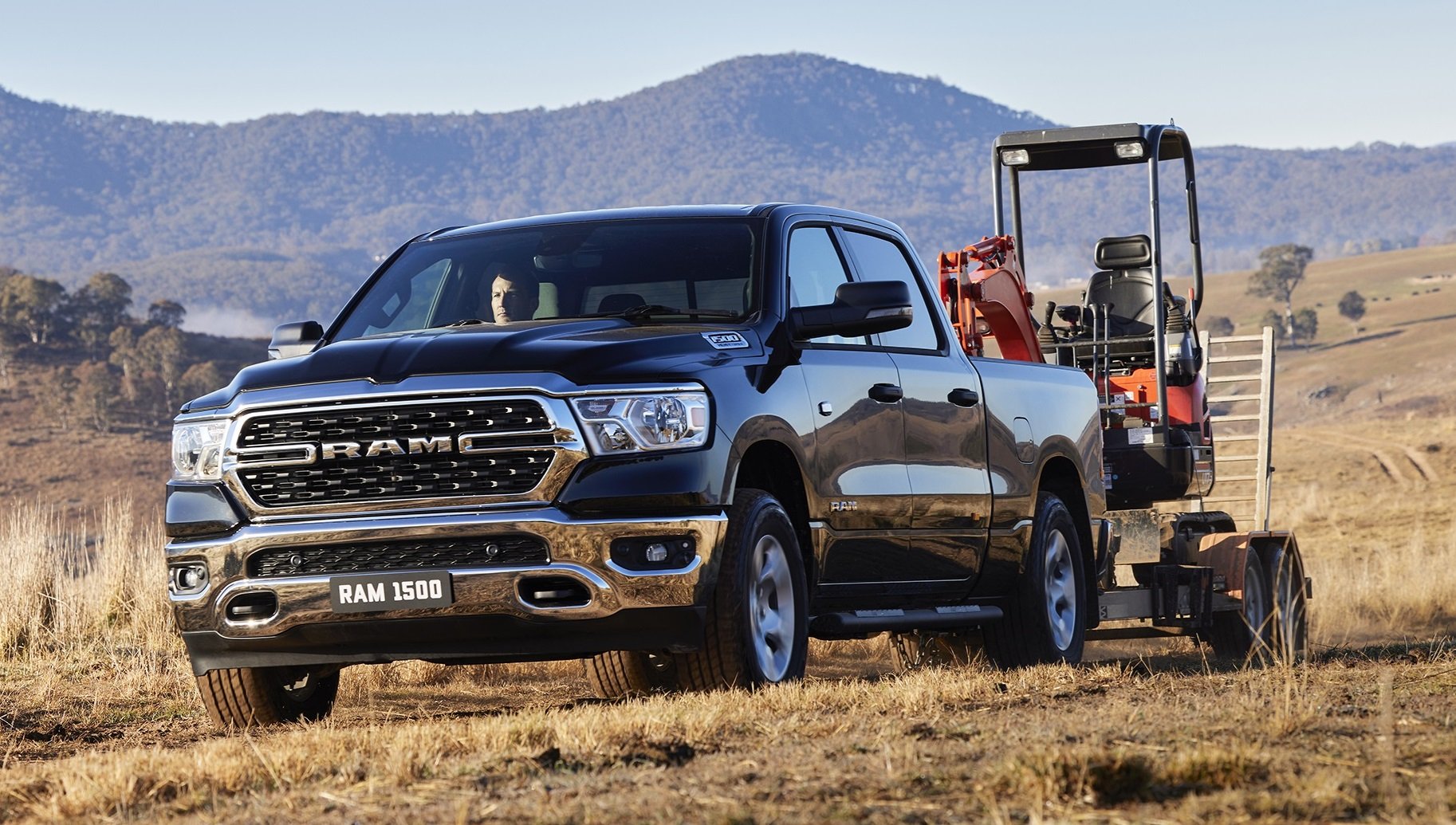
The Great Aussie Ute Transition: What to Buy in 2025 and 2026
For decades, the dual-cab utility vehicle has been the undisputed king of the Australian road. In 2024, the market hit a new record with over 1.2 million vehicles sold, and once again, the Ford Ranger and Toyota HiLux occupied the top steps of the podium. But despite the diesel dominance, the ground beneath our wheels is shifting.
With the federal government’s New Vehicle Efficiency Standard (NVES) officially tracking emissions as of July 1, 2025, and tax incentives for small businesses tightening, the era of the "default" diesel ute is facing its biggest challenge yet.
We are entering the "peak ute" transition. Over the next 18 months, Australian tradies, fleet managers, and 4x4 enthusiasts will be presented with choices that seemed like science fiction just five years ago. With the 2025 Ford Ranger PHEV, 2026 Isuzu D-Max EV, and Toyota HiLux BEV all inbound, the question is no longer if you should switch, but when.
In this guide, we analyse the specs, the costs, and the cold hard reality of towing and touring in the new electric landscape.
The New Contenders: 2025/2026 Electric Ute Comparison
While Chinese manufacturers like BYD and GWM have beaten legacy brands to the punch with the Shark 6 and Cannon Alpha, the "Big Three" of the Aussie ute market—Ford, Isuzu, and Toyota—are finally making their moves.
2025 Ford Ranger PHEV: The Hybrid Workhorse
Release Date: Mid-2025 Starting Price: ~$71,990 (XLT)
The Ford Ranger PHEV is arguably the most significant vehicle arrival of 2025. Unlike its fully electric rivals, Ford has opted for a Plug-in Hybrid (PHEV) architecture designed to bridge the gap between suburban efficiency and weekend capability.
The Specs: Under the bonnet, you won't find the familiar diesel oil-burner. Instead, the Ranger PHEV pairs a 2.3-litre EcoBoost turbo-petrol engine with a 75kW electric motor and an 11.8kWh battery. This combination delivers a staggering 697Nm of torque—the highest of any Ranger model currently available.
Capability & Towing: Critically for Aussie buyers, the Ranger PHEV retains the benchmark 3,500kg braked towing capacity and a payload capacity of nearly one tonne (973kg for the XLT). However, there is a nuance that buyers must understand: while the vehicle can tow 3.5 tonnes, it cannot do so in pure EV mode. When heavy loads are attached, the petrol engine will engage to provide the necessary grunt.
Real-World Range: Ford claims an electric-only range of approximately 45km to 49km (WLTP). While this won't get you across the Nullarbor, it covers the daily commute for many tradies, potentially allowing for fuel-free driving during the work week if charged overnight.
The Killer Feature: The standout feature for tradies is "Pro Power Onboard". This system provides standard 240v power outlets in the cabin and the tray, effectively turning the ute into a drivable generator capable of powering high-draw tools like circular saws or camping fridges without a separate generator.
2026 Isuzu D-Max EV: Zero Emissions, Full Payload
Release Date: Expected 2026 Estimated Price: $100,000+ AUD
Isuzu has built its reputation on rugged simplicity, so its entry into the EV space is a massive shift. The D-Max EV is a Battery Electric Vehicle (BEV), meaning no petrol or diesel backup.
The Specs: The D-Max EV utilizes a 66.9kWh lithium-ion battery powering dual motors (AWD) for a combined output of 140kW and 325Nm.
The Good News: Unlike many electric adaptations that lose capacity, Isuzu has engineered the D-Max EV to retain a 1,000kg payload and 3,500kg braked towing capacity. This is achieved through a revised rear suspension setup, swapping leaf springs for a De-Dion coil-spring rear axle.
The Bad News: The compromise is range. The WLTP driving range is cited at approximately 263km. For urban fleets or mines, this is sufficient. For private buyers looking to tour regional Australia, this figure will likely induce severe range anxiety, especially once a trailer is attached. Furthermore, pricing revealed in the UK (£59,995) suggests a local landing price potentially exceeding $100,000, significantly higher than its diesel equivalent.
2026 Toyota HiLux BEV: The Fleet Favorite
Release Date: First half of 2026 Estimated Price: TBC
Toyota is taking a "multi-pathway" approach, offering mild-hybrid diesels alongside this incoming fully electric model.
The Specs: The HiLux BEV (Battery Electric Vehicle) will run on a 59.2kWh battery, delivering power to front and rear electric axles. While official Australian specs are being finalized, reports indicate a driving range of roughly 315km (NEDC), though other sources suggest a real-world WLTP range closer to 240km.
Capability: This is where the HiLux BEV differs from the D-Max and Ranger. Pre-homologation data suggests a towing capacity of 1,600kg to 2,000kg, significantly lower than the 3.5-tonne industry standard.
Target Audience: Toyota has been clear that this vehicle is targeted at "back-to-base" fleets—think mining sites, local councils, and port operations—rather than the recreational off-roader or heavy-towing tradie.
Comparison Table: The Big Three Electrified
Feature | Ford Ranger PHEV | Isuzu D-Max EV | Toyota HiLux BEV |
|---|---|---|---|
Powertrain | 2.3L Petrol PHEV | Dual Motor BEV | Dual Motor BEV |
Towing Capacity | 3,500kg | 3,500kg | ~1,600kg - 2,000kg |
EV Range | ~45km | ~263km | ~240km - 315km |
Est. Price | ~$71,990+ | ~$100,000+ | TBC |
Best For | Tradies & Weekend Touring | Urban Fleets & Short Haul | Mining & Council Fleets |
Charging Infrastructure: Can You Travel Regionally?
One of the biggest barriers to EV adoption in Australia remains "range anxiety," particularly for those living outside capital cities. However, the infrastructure landscape is improving rapidly.
The Current Network As of late 2025, Australia boasts 1,272 fast-charging sites nationwide, representing a 20% increase in locations year-on-year. New South Wales leads the charge with 357 locations, followed closely by Victoria and Queensland.
Towing-Friendly Charging A major frustration for EV ute owners has been the physical design of charging bays, which often require unhitching trailers to access the plug. The NSW Government has addressed this in its latest funding rounds, specifically incentivising "pull-through" charging bays designed to accommodate an EV and a trailer/caravan/boat up to 8 meters long.
The WA Electric Highway For those in the West, the "tyranny of distance" is being tackled by the completion of the WA EV Network. This project has established the longest electric highway in the world, spanning over 2,000km and connecting regional centers like Kalgoorlie, Esperance, and Kununurra.
The Rural Reality Despite these gains, the sentiment in the bush remains skeptical. A recent survey indicated that 42% of regional residents feel Battery Electric Vehicles (BEVs) do not yet meet their driving needs. Reliability of chargers in remote areas remains a critical concern, with reports of broken infrastructure leaving drivers stranded. For rural buyers, the Ford Ranger PHEV likely remains the safest "electric" step, removing the risk of being stranded without a plug.
Financial Impacts: NVES, Tax, and Resale
Buying a ute in 2025/2026 isn't just about horsepower; it's about navigating a complex web of new taxes and regulations.
The NVES "Ute Tax"
The New Vehicle Efficiency Standard (NVES) is now in effect. From July 1, 2025, manufacturers are tallying emissions, and fines will eventually apply to brands that exceed their fleet-wide CO2 caps.
Impact: While consumers don't pay fines directly, manufacturers will likely pass these costs on. Industry analysis suggests that high-emitting vehicles like the diesel LandCruiser or Ranger could see price hikes of thousands of dollars by 2029 to offset the penalties incurred by the manufacturer.
Strategy: Buying a diesel ute now might avoid future price hikes, but be wary of future resale values as fuel prices potentially rise and diesel becomes stigmatized.
The Instant Asset Write-Off
For years, the Instant Asset Write-Off (IAWO) was the tradie's best friend, allowing the immediate deduction of the full cost of a new ute (often up to $150,000). Those days are over.
Current Status: The IAWO has been extended to 30 June 2026, but the threshold is capped at $20,000.
The Reality: You cannot buy a new Ranger, HiLux, or D-Max for under $20,000. This means new utes must be placed in the general small business depreciation pool (depreciating at 15% in the first year and 30% subsequently) rather than written off instantly.
Fringe Benefits Tax (FBT)
If you are considering a novated lease, timing is critical. The FBT exemption for Plug-in Hybrid Vehicles (PHEVs) is scheduled to end on 1 April 2025. If you want a Ford Ranger PHEV tax-free, you may have missed the boat for the full exemption unless legislative changes occur or delivery timings align perfectly with existing contracts entered into before the deadline. BEVs (like the D-Max and HiLux) remain eligible for the FBT exemption beyond this date.
Verdict: Buy Now or Wait?
The market is bifurcating. The "one size fits all" diesel ute is no longer the only logic.
Buy a Diesel Ute Now If:
You regularly tow heavy loads (2.5t+) over long distances (e.g., Grey Nomads).
You live in remote areas where charging infrastructure is non-existent.
You want to lock in current pricing before NVES penalties potentially drive up the cost of ICE vehicles in the late 2020s.
Note: With interest rates predicted to potentially hike in 2026 to combat sticky inflation, securing finance sooner rather than later might save you money.
Buy a PHEV/EV in 2025/2026 If:
Ranger PHEV: You are a tradie who wants to run power tools from the tray, commute on electric power to save fuel, but still need to tow a boat on weekends without range anxiety.
D-Max/HiLux EV: You manage a fleet with strict decarbonization targets, or you operate in an urban environment where daily travel is under 200km.
The electric revolution isn't coming; it's parked in the driveway. Whether you embrace the plug or stick to the pump depends entirely on where your work—and your weekend—takes you.
FAQ
1. Can the new Ford Ranger PHEV still tow 3.5 tonnes? Yes, the 2025 Ford Ranger PHEV retains the full 3,500kg braked towing capacity of its diesel counterparts. However, it cannot tow this maximum weight in pure EV mode; the petrol engine will engage to provide the necessary power and torque.
2. When is the electric HiLux coming to Australia? Toyota has confirmed the HiLux BEV (Battery Electric Vehicle) will arrive in Australia in the first half of 2026.
3. Does the $20,000 Instant Asset Write-off apply to new utes? Generally, no. The instant asset write-off threshold is capped at $20,000 until 30 June 2026. Since the purchase price of most new 4x4 utes exceeds this amount, they cannot be instantly written off. Instead, they must be placed in the small business simplified depreciation pool.
4. Will diesel utes get more expensive because of NVES? Likely yes. While manufacturers pay the fines, analysis suggests these costs will be passed on to consumers. By 2029, high-emitting vehicles could see price increases to offset the "debits" they create under the New Vehicle Efficiency Standard.
5. How much will the Isuzu D-Max electric ute cost? Official Australian pricing is yet to be announced, but based on UK pricing (£59,995), the Isuzu D-Max EV is expected to cost over $100,000 AUD when it lands in 2026.
Reference:
2025 Ford Ranger PHEV: Everything we know so far - 4X4 Australia,
2026 Electric Toyota HiLux: price, specs, towing, payload, release date | RACV,,
2026 Isuzu D-Max EV makes global debut ahead of Australian launch - Drive,
Small Business Support – $20,000 instant asset write-off | Australian Taxation Office,
#ElectricUte #FordRangerPHEV #IsuzuDMaxEV #ToyotaHiLux #NVES #TradieLife #4x4Australia #UteLife #FutureTransport #AussieRoadTrip
General
General Discussion Board Guidelines
자유게시판 채널 이용 안내

Nina Dobrev’s Aussie Era: Filming Bear Country & Life After Shaun White

Best Solar Inverters Australia 2026: Hybrids, V2G & Top Brands Ranked

Google Core Update 2025 Australia: Survival Guide & Recovery

Australia Heatwave 2026: Catastrophic Fire Danger & Pyroconvection Alert

Minneapolis ICE Shooting: Travel Safety & The Death of Renee Good

Best AI Tools Australia 2026: Top Picks for Work, Coding & Free Apps

LEGO 2026 Australia Guide: Smart Play, Ninjago 15th & Price List

Stranger Things Down Under: The Sydney Studio Behind ‘Tales From ’85’ & The Truth About Episode 9

Michael Schumacher Author Tribute: Remembering the Dharma Lion Biographer

LEGO SMART Play Australia: Release Date, Tech & Star Wars Prices Revealed

Trump’s 2026 Venezuela Raid: What Maduro’s Capture Means for Australia

Aussie Stars Dominate & 'One Battle After Another' Sweeps: The 2026 Critics Choice Awards Recap

Is the NSW Govt Holding Your Cash? Search the $300M Unclaimed Money Pool (2026)

'부산의 광속 서버' 샘 그로스, 정계 은퇴 선언: 스캔들, 소송, 그리고 내부의 적

Vale Phoenix Spicer: AFL Community Mourns Tragic Loss at 23

Lachie Neale Quits Captaincy: The "Unimaginable Betrayal" and What It Means for the Lions in 2026
History Made at the 80th Rolex Sydney Hobart: Min River Claims Overall Victory After Protest Drama

Tasmania’s Wild Summer 2025: From White Christmas to Bushfire Alerts
The Great Aussie Ute Transition: What to Buy in 2025 and 2026
