
NSW자유게시판
Anti-Ageing Secrets: Naked Mole-Rats & DNA Repair Research in Australia
/https://tf-cmsv2-smithsonianmag-media.s3.amazonaws.com/filer/55/08/55087447-e0dd-4dc2-9492-25d3ad336f6f/molerat_2.jpg)
Anti-Ageing Secrets: Naked Mole-Rats & DNA Repair Research in Australia
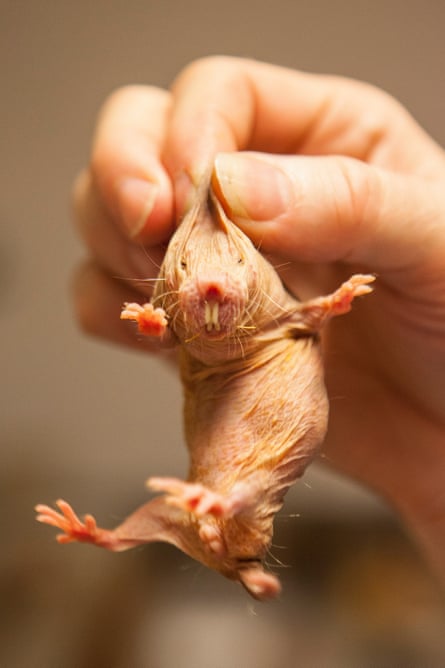
Let’s be honest: the naked mole-rat (Heterocephalus glaber) isn’t winning any beauty contests. With their wrinkled, hairless skin and oversized buck teeth, these subterranean rodents look like a bratwurst that’s been left in the sun too long. But beneath that unfortunate exterior lies a biological superpower that has scientists—including those right here in Australia—buzzing with excitement.
While mice (and humans) follow a predictable path of decline, naked mole-rats defy the "Gompertz-Makeham law" of mortality. Essentially, their risk of death doesn’t skyrocket as they get older. They live more than 30 years—nearly ten times longer than a mouse of similar size—and they stay remarkably healthy until the very end.
For Australians interested in biological age reduction and healthspan extension, this ugly little rodent is becoming a "supermodel" for medical research. From breakthrough DNA repair mechanisms discovered in 2025 to cutting-edge clinical trials in Adelaide, here is how the naked mole-rat is rewriting the rules of ageing.
The 2025 Breakthrough: Flipping the DNA Repair Switch
One of the biggest threats to our longevity is genomic instability. As we age, our DNA accumulates damage (double-strand breaks) that our bodies struggle to fix. In most mammals, including humans, a protein sensor called cGAS (cyclic GMP-AMP synthase) detects this damage. Unfortunately, in us, cGAS often triggers chronic inflammation or actually suppresses the repair process.
However, a landmark study published in Science has revealed that naked mole-rats have a hacked version of this system. Their cGAS enzyme contains just four specific amino acid substitutions (S463, E511, Y527, and T530) compared to the human version.
These tiny tweaks turn the cGAS protein from a barrier into a builder. Instead of inhibiting repair, the mole-rat version acts as an accelerator for homologous recombination—the most accurate way to fix broken DNA. It stays bound to the chromatin longer, calling in repair crews (proteins like FANCI and RAD50) to stitch the DNA back together perfectly.
The implications are massive. When researchers engineered these specific "mole-rat mutations" into mice, the animals showed reduced frailty, less grey hair, and healthier organs. It suggests that if we can tweak our own DNA repair mechanisms, we might be able to slow down the clock.
The "Goo" of Youth: High-Molecular-Mass Hyaluronic Acid
If you’ve ever looked at a skincare label, you know Hyaluronic Acid (HA). It’s the stuff that keeps skin plump. But naked mole-rats take this to an extreme level. Their bodies are saturated with a "super sugar" known as High-Molecular-Mass Hyaluronic Acid (HMW-HA).
This HMW-HA is five times larger than the version found in humans or mice. Evolutionarily, it likely developed to give their skin the elasticity needed to squeeze through tight underground tunnels without tearing. However, biology loves to multitask. This abundant "goo" ended up providing the animals with incredible resistance to cancer and inflammation.
Recent research has shown that this unique cellular environment is transferable. When the naked mole-rat gene responsible for making this super-sugar (nmrHas2) was transferred into mice, the results were stunning:
Extended Lifespan: The mice lived approximately 4.4% longer.
Cancer Resistance: They had a lower incidence of spontaneous tumours.
Reduced Inflammaging: The mice showed less age-related inflammation and maintained a healthier gut barrier.
For the anti-ageing research Australia community, this highlights that the extracellular matrix—the scaffold our cells sit in—is just as important as the cells themselves.
Cleaning Up the Damage: Cellular Pruning and Autophagy
Another secret to the naked mole-rat's success is how it handles "zombie cells." In humans, damaged cells often enter a state called senescence. They stop dividing but refuse to die, sitting in our tissues and pumping out inflammatory chemicals (SASP) that age the cells around them.
Naked mole-rats have a ruthless quality control system. When their cells become senescent due to stress or DNA damage, they don't just sit there. The mole-rat activates a specific pathway (INK4a-RB) combined with an enzyme called monoamine oxidase (MAO). This triggers a serotonin-driven metabolic reaction that produces hydrogen peroxide inside the bad cell, effectively killing it off.
By actively pruning these damaged cells, the naked mole-rat prevents the toxic buildup that leads to tissue deterioration. This natural "senolysis" (killing of senescent cells) is paired with high rates of autophagy—the body's way of recycling cellular junk.
From the Burrow to the Clinic: Retro Biosciences in Adelaide
You might be thinking, "That’s great for the rodents, but what about me?" This is where the story lands on Australian soil.
Retro Biosciences, a longevity biotechnology company backed by OpenAI CEO Sam Altman, is explicitly working to add 10 healthy years to the human lifespan. They are not just theorising; they have moved into clinical trials.
Remarkably, Retro Biosciences chose Adelaide, Australia for their first-in-human Phase 1 clinical trial. They are testing a drug candidate called RTR242.
What is the trial about?
The Target: The drug is designed to restore autophagy and lysosomal function. As we age, our lysosomes (the waste disposal units of the cell) lose acidity and stop breaking down junk.
The Goal: By restoring this function, the drug aims to help the body clear out toxic protein aggregates, which are implicated in neurodegenerative conditions like Alzheimer’s disease.
Why Adelaide? Australia offers a streamlined regulatory environment for early-phase clinical trials. Data gathered here is accepted by the US FDA, allowing companies to accelerate the development of longevity therapeutics.
This trial represents a shift from simply treating symptoms to targeting the root causes of biological ageing, inspired by the mechanisms seen in super-agors like the naked mole-rat.
What This Means for Your Healthspan
We cannot genetically engineer ourselves to become mole-rats (and given the teeth, perhaps that’s a good thing). However, the science is pointing toward actionable pathways. The HMW-HA benefits observed in mice suggest that protecting our own hyaluronic acid from degradation could be vital. Furthermore, the focus on autophagy in the Retro Biosciences Adelaide trial confirms that lifestyle factors promoting cellular recycling—such as exercise and fasting—are scientifically sound strategies while we wait for pharmaceutical interventions.
The naked mole-rat proves that physical decline is not an absolute biological certainty. With Australian clinical trials now pushing the boundaries, we are closer than ever to unlocking the secrets of this ugly, incredible rodent.
FAQ: Naked Mole-Rats and Longevity
Q: Do naked mole-rats ever get cancer? A: It is extremely rare. While not biologically impossible, they have multi-layered defence mechanisms. One key defence is "early contact inhibition" mediated by HMW-HA, which stops cells from overcrowding and forming tumours.
Q: Can humans increase their High-Molecular-Mass Hyaluronic Acid? A: Currently, this is being researched. Simple supplements usually contain low-molecular-weight HA, which does not have the same anti-cancer and anti-inflammatory properties. Researchers are looking for enzyme inhibitors to stop the breakdown of HMW-HA in the body.
Q: Why is the Retro Biosciences trial happening in Adelaide? A: Australia offers a streamlined regulatory environment for Phase 1 (safety) trials. Data gathered in Adelaide is accepted by the US FDA and European agencies, allowing companies to move faster in developing longevity therapeutics.
Q: Do naked mole-rats die of old age? A: They defy the "Gompertz law," meaning their risk of death does not increase exponentially with age like it does in humans. They stay healthy for decades and usually die from extrinsic causes (like fighting) or eventual physiological wear, rather than the predictable degenerative diseases seen in other mammals.
Q: How does the naked mole-rat repair its DNA? A: They possess a unique version of the cGAS enzyme. In humans, cGAS can inhibit repair, but in naked mole-rats, four specific amino acid changes allow it to anchor to DNA and accelerate homologous recombination, the most accurate form of DNA repair.
References
Ruby, J. G., Smith, M., & Buffenstein, R. (2018). Naked mole-rat mortality rates defy Gompertzian laws by not increasing with age. eLife, 7:e31157. Link
Tian, X., et al. (2013). High-molecular-mass hyaluronan mediates the cancer resistance of the naked mole rat. Nature, 499, 346–349. Link
Kawamura, Y., et al. (2023). Cellular senescence induction leads to progressive cell death via the INK4a-RB pathway in naked mole-rats. The EMBO Journal, 42(16), e111133. Link
Zhang, Z., et al. (2023). Increased hyaluronan by naked mole-rat Has2 improves healthspan in mice. Nature, 621, 196–205. Link
Chen, Y., et al. (2025). A cGAS-mediated mechanism in naked mole-rats potentiates DNA repair and delays aging. Science, 390(6769). Link
#nakedmolerat #longevityresearch #antiageing #retrobiosciences #adelaide #dnarepair #biohacking #healthspan #biotech #science
자유게시판
General Discussion Board Guidelines
자유게시판 채널 이용 안내

Nina Dobrev’s Aussie Era: Filming Bear Country & Life After Shaun White

Best Solar Inverters Australia 2026: Hybrids, V2G & Top Brands Ranked

Google Core Update 2025 Australia: Survival Guide & Recovery

Australia Heatwave 2026: Catastrophic Fire Danger & Pyroconvection Alert

Minneapolis ICE Shooting: Travel Safety & The Death of Renee Good

Best AI Tools Australia 2026: Top Picks for Work, Coding & Free Apps

LEGO 2026 Australia Guide: Smart Play, Ninjago 15th & Price List

Stranger Things Down Under: The Sydney Studio Behind ‘Tales From ’85’ & The Truth About Episode 9

Michael Schumacher Author Tribute: Remembering the Dharma Lion Biographer

LEGO SMART Play Australia: Release Date, Tech & Star Wars Prices Revealed

Trump’s 2026 Venezuela Raid: What Maduro’s Capture Means for Australia

Aussie Stars Dominate & 'One Battle After Another' Sweeps: The 2026 Critics Choice Awards Recap

Is the NSW Govt Holding Your Cash? Search the $300M Unclaimed Money Pool (2026)

'부산의 광속 서버' 샘 그로스, 정계 은퇴 선언: 스캔들, 소송, 그리고 내부의 적

Vale Phoenix Spicer: AFL Community Mourns Tragic Loss at 23

Lachie Neale Quits Captaincy: The "Unimaginable Betrayal" and What It Means for the Lions in 2026
History Made at the 80th Rolex Sydney Hobart: Min River Claims Overall Victory After Protest Drama

Tasmania’s Wild Summer 2025: From White Christmas to Bushfire Alerts

The Great Aussie Ute Transition: What to Buy in 2025 and 2026
